
Introduction
The best Japanese small plates, called mamezara (豆皿), are little 8–15 cm dishes used to serve appetizers, condiments, and small bites — and if you want one reliable place to start, a blue-and-white Hasami ware (Hasami-yaki) mamezara is my top pick. The word mamezara literally means “bean plate,” a nod to its tiny size. As a tableware collector living in Yokohama, I use these dishes every day, and they are the easiest way to make even a quick meal feel considered.
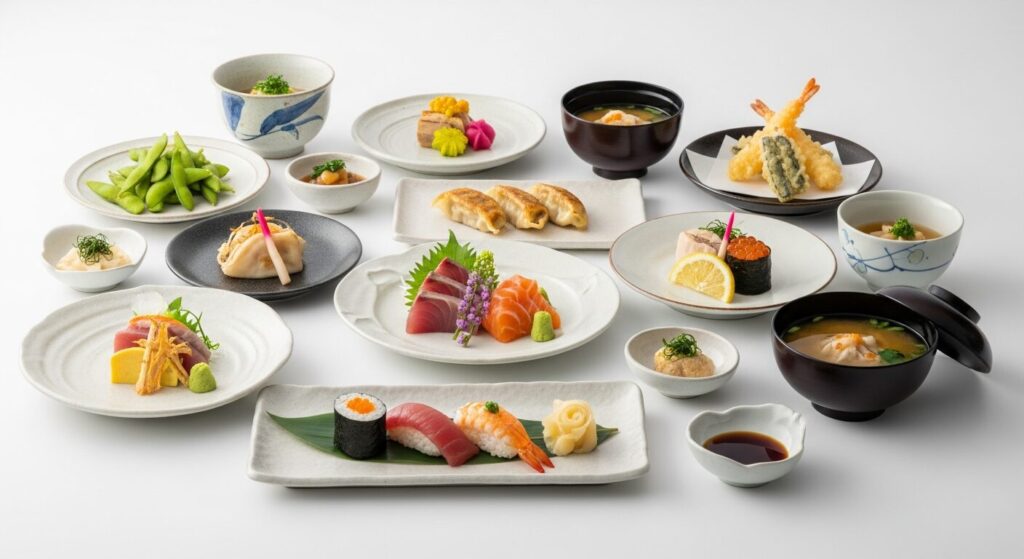
A mamezara lets each item on the table stand on its own — a scoop of pickles, a single sweet, a dab of sauce. A traditional Japanese meal often follows the ichiju-sansai idea (one soup, three sides), and small plates give each side its own space so flavors and colors never blur together. That small detail is exactly what I love about the old kissaten (retro coffee houses) in Yokohama’s Motomachi district, where the vessels and the room feel like one unified thing.
Why mamezara matter
Mamezara matter because they turn ordinary eating into something intentional, without any extra effort. They keep flavors separate, frame each portion, and invite you to slow down. I spend my weekdays eating a Nissin Cup Noodle at my office desk, so I genuinely value the evenings and weekends when I can plate a few snacks properly and actually look at my food.
I learned how much dishware affects a meal the hard way. For years I used a cheap donburi (丼, a deep rice bowl) from Nitori for everything, especially my instant ramen. It worked, but the noodles cooled far too fast — proof that material and shape change the eating experience, not just the look. I’m also reminded of fragility often: last month I knocked two ceramic bowls off a shelf in my cramped kitchen and broke both. Beautiful Japanese tableware is worth collecting, but choosing the right material and storing it carefully matters just as much. If you want more on everyday bowls, see my guide to choosing the right ramen bowl.
Types of mamezara
Mamezara come in four main materials — porcelain, stoneware, earthenware, and glass — and each suits a different mood and dish. Below is a quick guide to how they differ in feel, durability, and best use.
Porcelain (jiki)
Porcelain, or jiki, is fired at very high temperatures, giving it a smooth, non-porous surface that resists chips — the most durable choice for daily use. Porcelain mamezara often carry fine hand-painted patterns or a clean white glaze that makes colorful food pop. The first time I held an Arita ware (Arita-yaki) piece while tidying my parents’ kitchen, its surprising weight and silky texture stayed with me.
Stoneware (toki)
Stoneware, or toki, is fired at slightly lower temperatures, so it keeps a warmer, earthier texture and muted natural tones. It is robust and well suited to everyday meals. Mino ware (Mino-yaki) stoneware in particular has a grounded, comforting feel that pairs well with pickles or a hearty side.
Earthenware (doki)
Earthenware, or doki, is the oldest pottery type — coarse, porous, and fired at the lowest temperatures, so it is less durable but full of ancient character. It is uncommon for mamezara specifically, but its raw, rustic charm appeals to anyone drawn to a sense of history.
Glass (garasu)
Glass, or garasu, plates feel modern and cooling, which is why they suit Japan’s humid summers. Their transparency lets chilled appetizers, fruit, or desserts take center stage, and they catch the light in a way ceramics cannot. They are a bright contrast to the traditional pieces I usually collect.
Top 5 mamezara to buy
My top overall pick is a blue-and-white Hasami ware mamezara — affordable, versatile, and easy to find as handmade sets. Below are five styles I recommend, chosen by pottery tradition rather than a single fragile listing, so you can pick the one that fits your table. Prices are approximate and vary by maker.
1. Hasami ware (Hasami-yaki) blue-and-white mamezara
Hasami ware from Nagasaki is the easiest place to start: clean blue-and-white inban (transfer-printed) patterns, smooth porcelain, and prices that suit a first set. The crisp white body makes pickles or a single sweet stand out, and most pieces are microwave and dishwasher safe. This is the everyday workhorse I reach for most.
- Pottery type: Hasami ware (Hasami-yaki), porcelain
- Origin: Hasami, Nagasaki Prefecture
- Typical size: 9–12 cm
- Approximate price: ¥1,000–¥2,500 per set
Check current price and availability on Amazon →
2. Mino ware (Mino-yaki) mamezara set
For warmth and variety, a Mino ware set is hard to beat — this Gifu tradition makes up a large share of Japan’s everyday ceramics, so sets of five in mixed shapes and glazes are widely available. The earthy tones suit hearty appetizers and pickles, and a mixed set lets you give each side dish its own character. I use mine constantly alongside weekend meals.
- Pottery type: Mino ware (Mino-yaki), stoneware/porcelain
- Origin: Mino, Gifu Prefecture
- Typical size: 9–13 cm
- Approximate price: ¥2,000–¥4,500 for a set of five
Check current price and availability on Amazon →
3. Kutani ware (Kutani-yaki) decorative mamezara
When you want a plate that doubles as art, Kutani ware delivers — this Ishikawa tradition is known for bold colors and gold detailing, including motifs like Hokusai’s wave and Mount Fuji. These are best for special occasions or as a gift, presenting a single sweet beautifully. They cost more, but a single piece becomes a small centerpiece.
- Pottery type: Kutani ware (Kutani-yaki), porcelain
- Origin: Ishikawa Prefecture
- Typical size: 9–11 cm
- Approximate price: ¥2,500–¥5,000+
Check current price and availability on Amazon →
4. Handmade animal-motif mamezara gift set
If you are buying for someone else, a handmade animal-motif set — cats, cranes, rabbits — is the friendliest choice. Many are Mino ware pieces that arrive in a wooden gift box, which makes them an easy present for a Japan lover. I keep one cat plate by my entrance as a tray for keys, exactly the kind of everyday reuse mamezara invite.
- Pottery type: Often Mino ware (Mino-yaki), porcelain
- Origin: Japan (varies by maker)
- Typical size: 8–10 cm
- Approximate price: ¥2,500–¥5,000 per boxed set
Check current price and availability on Amazon →
5. Glass (garasu) mamezara
For warmer months, a glass mamezara keeps the table feeling light. Their transparency lets chilled fruit, jelly, or a summer sweet take center stage, and they catch the light in a way ceramics cannot. I treat these as my seasonal pieces, a cool counterpoint to the porcelain I use the rest of the year.
- Material: Glass
- Origin: Japan (varies by maker)
- Typical size: 8–12 cm
- Approximate price: ¥1,200–¥3,000
Check current price and availability on Amazon →
My experience
Collecting Japanese tableware has been rewarding, but not without mistakes. For years I was happy with a cheap donburi from Nitori, used for everything including my weekday cup ramen at my desk. It was practical, yet the noodles always cooled fast — a small frustration that slowly convinced me even a simple meal deserves a better dish.
My view changed completely when I first handled an Arita-yaki bowl while clearing out my parents’ cabinet. Its weight and texture felt like holding a piece of history, and that moment sparked my interest in quality Mino-yaki and Arita-yaki.
Not every purchase worked out. I once ordered a lovely-looking donburi online based purely on the photo, and when it arrived it was far too shallow — my ramen and toppings spilled straight over the rim. It taught me that for tableware, practical fit matters as much as looks. I have also been caught out by a piece labeled “日本製” (Made in Japan) that, after some digging, turned out to be produced overseas. When you are seeking genuine craftsmanship, that stings. For more on this, see my notes on spotting authentic Japanese ceramics.
That same love of atmosphere is why I keep returning to the old kissaten in Motomachi, where the cups and plates feel inseparable from the room. I usually visit on weekends, sometimes after a bowl of Iekei ramen at shops like Yoshimura-ya or Sugita-ya. I even tried to recreate Iekei broth at home, simmering it for eight hours — but it came out thin and flat. Some things are best left to the experts.
FAQ
What is a mamezara used for?
A mamezara is a small Japanese plate used to serve individual portions of appetizers, condiments, pickles, or small desserts. Its compact size presents each item neatly without letting flavors mix, which is why it is a staple of Japanese table settings.
Are Japanese small plates microwave and dishwasher safe?
Many porcelain and stoneware mamezara are microwave and dishwasher safe, but always check the maker’s care instructions first. I once had a “dishwasher safe” ceramic piece lose its glaze after repeated washes, so hand-painted and earthenware items in particular deserve extra caution.
How do I choose the right size of mamezara?
Match the size to the food: 8–10 cm suits single bites and condiments, while 10–15 cm works for a small appetizer or side. Consider the proportion to the dish and the rest of your table. I once bought a bowl online that was too shallow to use, so check dimensions carefully before buying.
What makes Japanese tableware unique compared to Western designs?
Japanese tableware tends to value practical use and individual character alongside beauty, often celebrating asymmetry rather than uniformity. Living in Japan, I notice how the design considers the whole experience — the weight in your hand, how the piece sits in the room — much like the harmony I admire in old kissaten.
Can I use mamezara for non-Japanese cuisine?
Yes. Mamezara are versatile enough for appetizers, sauces, or small desserts from any cuisine. Their size and design make them a graceful addition to any table — I use mine for everything from cheese and crackers to a small scoop of ice cream.
Where to buy mamezara
If you are in Japan, the best way to buy mamezara is in person at specialty tableware shops or department stores in cities like Yokohama and Tokyo, where you can feel the weight and texture before choosing. Touch tells you things a photo cannot.
If you are abroad, Amazon Japan (amazon.co.jp) is one of the most accessible options, carrying a wide selection of Hasami-yaki, Mino-yaki, and Kutani-yaki sets that ship internationally. Look for listings that clearly state the pottery type and origin region, and always read recent reviews and check exact dimensions — a habit I picked up after that too-shallow bowl. Buying a small set first is a low-risk way to find the shapes you actually reach for.
Final thoughts
Adding mamezara to your kitchen is a small, low-cost way to bring intention to everyday meals. From the crisp porcelain of Hasami to the rustic warmth of Mino stoneware, each piece carries a bit of craft and tradition. As someone who values both the beauty and the practicality of Japanese tableware, I can say honestly that these little dishes change how I eat — they make me slow down and pay attention. Like a good cup in a Motomachi kissaten, it was never only about the food; it was about the whole feeling of using something well made.